Most safety incidents don’t happen because people ignore rules—they happen because people forget them, misunderstand them, or weren’t properly reminded in the first place. That’s where toolbox talks come in.
These short, focused safety meetings cut through the noise. They’re not full training sessions, but targeted conversations—10 to 15 minutes long—that address real hazards workers face daily. When done right, a strong list of toolbox talks becomes the backbone of a proactive safety culture. But too many teams either skip them altogether, treat them as box-ticking exercises, or repeat the same topics without context. That’s not just ineffective—it’s dangerous.
This guide gives you a practical, actionable list of toolbox talks tailored to common and high-risk scenarios. More importantly, it shows you how to choose, organize, and deliver them so they actually stick.
Why a Structured List of Toolbox Talks Matters
A random safety talk isn’t enough. You need a planned, rotating schedule that reflects actual job risks. Without a structured list, you risk:
- Repeating the same few topics (e.g., “hard hats on” every week)
- Missing critical hazards unique to your site
- Failing to engage teams who see talks as repetitive
- Falling short of compliance audits
A well-organized list of toolbox talks aligns with: - Project phases (excavation → framing → electrical) - Seasonal risks (heat stress in summer, slips in winter) - Incident trends (e.g., spike in near-misses involving ladders) - Regulatory requirements (OSHA, ANSI, CSA)
For example, a roofing crew should cycle through talks on fall protection, weather awareness, and PPE—while a warehouse team prioritizes forklift safety, load securing, and aisle clearance. One-size-fits-all doesn’t work.
Core Categories of Effective Toolbox Talks
Break your list into categories to ensure full coverage. Here are the most critical areas:
1. Personal Protective Equipment (PPE) Daily reminders on correct use, inspection, and limitations of PPE prevent complacency.
Sample topics: - Hard hat inspection and replacement - Choosing the right gloves for chemical vs. cut resistance - Fit-testing respirators before entering confined spaces - When and how to wear high-visibility clothing
Common mistake: Assuming PPE = automatic protection. A talk should stress that PPE is the last line of defense—after engineering and administrative controls.
2. Fall Protection Falls are the leading cause of construction fatalities. Talks must go beyond “use harnesses.”
Key discussion points: - Proper anchor point selection - Lanyard inspection for fraying or shock pack damage - Fall clearance calculations - Rescue plans after a fall (often overlooked)
Real use case: After a near-miss where a worker’s harness wasn’t connected, a site implemented weekly fall protection talks—including live demos of harness checks. Incident reports dropped 40% in two months.
3. Hazard Communication Workers interact with chemicals daily—from solvents to cleaning agents. Misunderstanding labels kills.
Vital subtopics: - Reading SDS (Safety Data Sheets) quickly - Understanding GHS pictograms - Proper storage and spill response - Incompatibility risks (e.g., bleach + ammonia = toxic gas)

Include a printed label during the talk and have workers interpret it. Active participation increases retention.
4. Equipment and Tool Safety Hand and power tools cause thousands of injuries yearly. Talks should focus on misuse, not just operation.
Critical angles: - Using the right tool for the job (e.g., no using screwdrivers as chisels) - Inspecting cords and guards before use - Lockout/tagout (LOTO) during maintenance - Preventing kickback with saws and grinders
Workflow tip: Pair talks with a tool inspection walk-through. Have crews check their own gear—ownership increases accountability.
5. Fire and Electrical Safety
Many workers don’t realize how quickly electrical hazards escalate.
High-impact topics: - Overloaded extension cords and daisy-chaining - Working near live panels—even with PPE - Arc flash risks and boundary zones - Fire extinguisher types and PASS technique
Limitation: A 10-minute talk won’t replace electrical safety training. But it can reinforce protocols and answer real-time questions before a task begins.
10 Must-Have Toolbox Talks for Any Site
Here’s a focused list of toolbox talks that every safety manager should cycle through—at minimum:
- Ladder Safety
- - 3-point contact rule
- - Angle setup (1:4 ratio)
- - Overhead power line clearance
- Slips, Trips, and Falls (Same-Level)
- - Housekeeping best practices
- - Wet surface protocols
- - Proper footwear selection
- Confined Space Entry
- - Atmospheric testing procedures
- - Attendant roles and communication
- - Rescue equipment checks
- Manual Handling and Ergonomics
- - Lift with legs, not back
- - Team lifting coordination
- - Use of mechanical aids
- Hot Work Permits
- - Fire watch duration (30+ minutes post-work)
- - Flammable material relocation
- - Permit verification steps
- Situational Awareness
- - Recognizing distraction triggers
- - Stop-work authority
- - Peer-to-peer safety cues
- Weather-Related Hazards
- - Heat stress symptoms and hydration
- - Lightning safety protocols
- - Winter traction and wind awareness
- PPE Inspection and Care
- - Daily visual checks
- - Cleaning respirator filters
- - Reporting damaged gear
- Mobile Equipment Awareness
- - Blind spot zones around vehicles
- - Communication with spotters
- - Seatbelt use enforcement
- Incident Reporting Culture
- - Near-miss reporting = prevention
- - No-blame investigation approach
- - How one report can save lives
Rotate these monthly or bi-weekly. Use incident data to prioritize—e.g., after a minor burn, bump up hot work or fire extinguisher talks.
How to Deliver Toolbox Talks That Stick
Even the best list fails if delivery is flat. Follow these editorial-tested tips:
1. Keep it conversational Avoid reading slides. Ask questions: “Who’s seen a damaged ladder get used anyway?” Real stories resonate.
2. Use visuals Bring the actual PPE, tool, or permit form. Show a photo of a real near-miss (anonymized).
3. Rotate facilitators Let experienced crew members lead occasional talks. Peer-led sessions often have higher engagement.
4. Tie to the day’s work If crews are setting scaffolding, talk scaffolding safety—same morning. Context increases relevance.
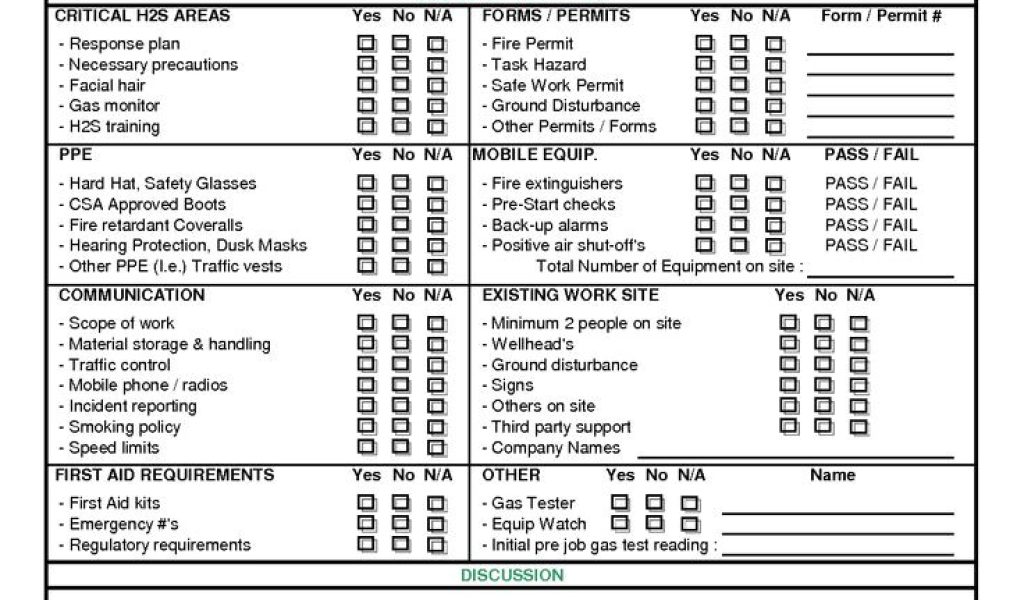
5. Document, but don’t over-complicate Sign-in sheets matter for audits, but don’t turn into paperwork drudgery. Use a simple checklist: topic, date, attendees, facilitator, key takeaway.
Integrating Toolbox Talks Into Your Safety Workflow
A list isn’t a plan. To get results, build it into your routine.

Weekly cycle example: - Monday: Supervisor selects topic based on upcoming tasks - Tuesday AM: 10-minute talk before shift - Wednesday: Safety lead does spot check on topic compliance - Friday: Brief review in team meeting
Use digital tools if paper logs slow you down. Apps like SafetyCulture or iAuditor let you schedule talks, attach templates, and track completion—all from a tablet.
But remember: tech supports the process, doesn’t replace presence. The most effective talks happen face-to-face, on-site, with boots on the ground.
Avoid These Common Toolbox Talk Mistakes
Even experienced teams fall into traps. Steer clear of:
❌ Repetition without variation Saying “wear your hard hat” weekly bores people. Instead, rotate: inspection rules, suspension system care, or impact testing standards.
❌ One-way lectures Monologues lose attention. Ask, “What would you do if you saw this?” and show a photo of a safety violation.
❌ Ignoring feedback If workers say a talk was irrelevant, listen. Adjust topics to match real concerns.
❌ Skipping when rushed When schedules tighten, safety talks are often first to go. That’s backward. High-pressure days need safety focus most.
❌ No follow-up After a talk on lockout/tagout, do a quick check: are energy sources properly isolated? Reinforcement makes it real.
Final Checklist: Building Your Custom List
Use this to audit or create your own toolbox talk schedule:
✅ Covers all high-risk activities on your site ✅ Includes seasonal and project-phase adjustments ✅ Balances compliance topics and behavioral safety ✅ Rotates every 4–6 weeks to avoid repetition ✅ Assigns facilitators in advance ✅ Links talks to real work happening that day ✅ Documents attendance and key points
Your list shouldn’t be static. Review it quarterly. Add topics after incidents. Drop ones that no longer apply.
A dynamic list of toolbox talks isn’t just a compliance tool—it’s a communication engine. It turns safety from a policy into a daily conversation. And in high-risk environments, that conversation can be the difference between a close call and a catastrophe.
What are the most common toolbox talk topics? Fall protection, PPE use, ladder safety, hazard communication, and lockout/tagout are among the most frequently covered topics due to their high incident rates.
How long should a toolbox talk last? Aim for 10 to 15 minutes. Long enough to cover key points, short enough to maintain attention and fit into start-of-shift routines.
Who should lead toolbox talks? Supervisors typically lead, but rotating experienced crew members as facilitators increases engagement and peer accountability.
Can toolbox talks reduce workplace incidents? Yes—when delivered consistently and relevantly, they reinforce safe behaviors and increase hazard awareness, directly reducing near-misses and injuries.
Should toolbox talks be documented? Yes. Attendance logs and topic records are critical for compliance, auditing, and tracking safety program effectiveness.
How often should toolbox talks be held? Weekly is standard for active sites. High-risk tasks or post-incident periods may require more frequent sessions.
Can toolbox talks be done digitally? Yes. Many teams use tablets and safety apps to deliver, record, and track talks—especially useful for remote or multi-site operations.
FAQ
What should you look for in Essential Toolbox Talks for Safer Workplaces? Focus on relevance, practical value, and how well the solution matches real user intent.
Is Essential Toolbox Talks for Safer Workplaces suitable for beginners? That depends on the workflow, but a clear step-by-step approach usually makes it easier to start.
How do you compare options around Essential Toolbox Talks for Safer Workplaces? Compare features, trust signals, limitations, pricing, and ease of implementation.
What mistakes should you avoid? Avoid generic choices, weak validation, and decisions based only on marketing claims.
What is the next best step? Shortlist the most relevant options, validate them quickly, and refine from real-world results.